

 Apple Podcasts

 Spotify

 Castro

 RSS Feed

 Audible

 YouTube

 Podchaser

 Goodpods

 Castbox
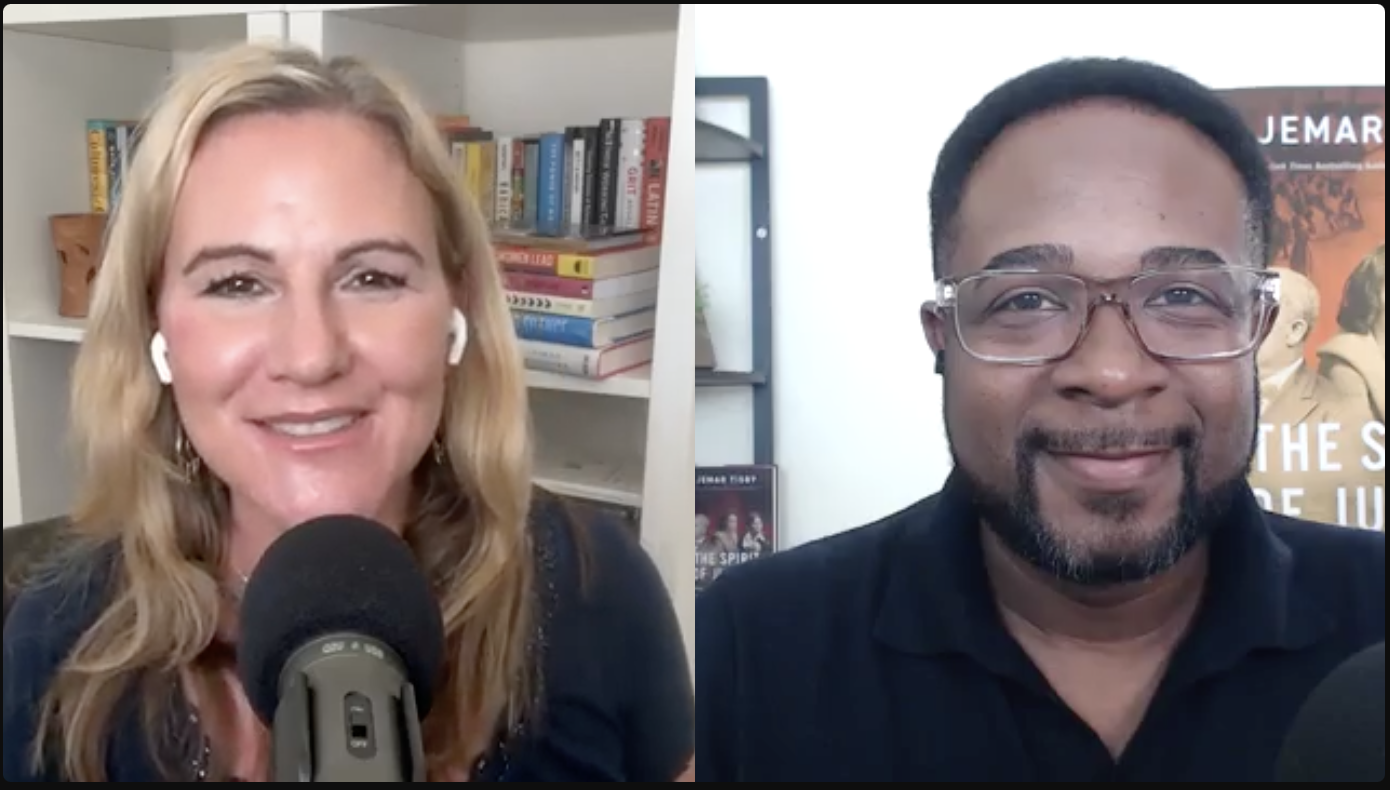
Jemar Tisby and Doug Strong on Awakening to Justice

Rediscovering Abolitionists' Calls for Equality
If you're feeling overwhelmed by the complexities of racial justice and faith intersections, and wondering how to truly make a difference, then you are not alone! The struggle to understand the historical context and apply it to modern-day challenges can be daunting. Many may be seeking guidance on how to effectively navigate these issues and create meaningful change.
Jemar Tisby, the New York Times bestselling author of "The Color of Compromise," is a historian, author, and speaker. His work has been featured in reputable platforms such as CNN, the Washington Post, the Atlantic, and the New York Times. Jemar's expertise in addressing the truth about the American church's complicity in racism makes him a significant voice in the intersection of faith and racial justice. As a PhD candidate in history at the University of Mississippi, his commitment to shedding light on historical lessons from abolitionist movements and advocating for social reform through interracial solidarity is evident in his work. Jemar's impact extends beyond academia as he is the founder and president of the Witness of Black Christian Collective and the co-host of the Pass the Mic podcast. His dedication to historical research and advocacy for justice makes him an influential figure in the conversation on racial equity and social change.
Doug Strong, an esteemed author and professor with a wealth of knowledge in American religious history, specifically focusing on the 19th-century revivalism and social reform, is a vital voice in the discussion of faith and racial justice. With an MDIV and a PhD from Princeton Theological Seminary, Doug's expertise and dedication to understanding the historical abolitionist movements bring valuable insights to the current social and racial justice landscape. As a committed pastor and a professor at Seattle Pacific University, Doug's passion for intercultural learning and his extensive experience in leading students on international trips underscore his commitment to shaping a global perspective on faith and justice. His contributions to the Awakening to Justice: Faithful Voices from the Abolitionist Past project reflect his deep understanding of the impact of historical narratives on contemporary social reform.
The theological, the Christian principle of loving your neighbor as yourself is still applicable in that situation. And what it forces us to do is to try to perceive the world from another person's perspective, which is what a world of difference podcast is all about. - Jemar Tisby
In this episode, you will be able to:
- Explore the profound impact of faith on driving meaningful change in racial justice movements.
- Uncover valuable historical insights and powerful tactics used by abolitionist movements to inspire modern-day activism.
- Discover the pivotal role of interracial solidarity in advancing social reform and creating lasting change.
- Learn actionable strategies from historical abolitionists to empower and guide today's activists in their advocacy work.
The resources mentioned in this episode are:
- Visit awakeningtojustice.com for free resources related to the book Awakening to Justice: Faithful Voices from the Abolitionist Past, including a discussion guide, sermon ideas, music suggestions, worship song ideas, and a 35-minute film documentary.
- Order a copy of "Awakening to Justice," at: https://www.ivpress.com/awakening-to-justice and get a discount just for A World of Difference podcast listeners with promo code: IVPPOD20
- Subscribe to Jemar Tisby's substack at jemartisby.substack.com for more of his writing and insights on racial justice and faith.
The justification follows the action. In the case of us race-based chattel slavery, slaveholders were going to get their money. They were going to find laborers. They were going to increase their bottom line by not paying them. And then they were going to come up with the rationale and the reasoning to justify it. - Jemar Tisby
Learn more about your ad choices. Visit megaphone.fm/adchoices
Follow the podcast at:
- https://www.youtube.com/@aworldofdifference
- https://www.aworldofdifferencepodcast.com
- https://www.linkedin.com/company/aworldofdifference/
- https://www.instagram.com/aworldof.difference/
Join our Difference Maker membership community for a ton of exclusive content for as little as $5/month. (The price of your a latte at your local coffee shop to enjoy a whole month of content.) Lori's Travel Tips are included as well as exclusive minisodes with our guests not available anywhere else. Join for deeper conversations and a little fun today at https://www.patreon.com/aworldofdifference
Keep making a difference wherever you are!

Lori Adams-Brown, Host & Executive Producer
A World of Difference Podcast
0:00 Welcome to the A World of Difference podcast. I'm Lori Adams Brown and this is a podcast for those who are different and want to make a difference. Today we have a couple of authors on the show that have written an amazing book that is just being released, and the authors we're having on the show are Jamar Tisbee and Doug Stone. Jamar Tisby is the author of the New York Times bestselling book the Color of Compromise, which is about the truth about the american church's complicity and racism, which many of you have read. His writing has been featured on CNN, the Washington Post, the Atlantic, and the New York Times. He's recently featured in the documentary God and Country, and he's the founder and president of the Witness of Black Christian Collective and the co host of Pass the Mic podcast. He's a PhD candidate in history at the University of Mississippi, and Doug Stone is also one of the authors of this book that we're going to be featuring today, but he also teaches at both undergraduate and graduate courses in the School of Theology. His MDIV is from Princeton Theological Seminary and his PhD is also from Princeton Theological Seminary. Doug's field of study is american religious history, particularly the history of 19th century revivalism, social reform, and the Wesleyan Holiness movement in America. He's the past president of the Wesleyan Theological Society, a co convener of the history of Methodism, working group of the Oxford
1:30 Institute of Methodist Theological Studies, and is on the steering committee of the Wesleyan Studies group of the American Academy of Religion. He's conducted several Wesley heritage study tours to England, and he's also led students on numerous trips to Russia. He has taught four times at the theological Seminary of the Russian Methodist Church and served on that school's board of trustees, and he also taught at two theological schools in Korea. He's very committed to intercultural learning as essential for students preparing to live out their christian vocation in a global society. Doctor Strong is also an ordained clergyman in the United Methodist Church and served for eight years as a pastor in east Brunswick, New Jersey. He's especially interested in reviving the wesleyan practice of small group, accountable discipleship among today's christians, and the book they're on talking about today is part of the dialogue on race and Faith project, and it's called awakening to justice, faithful voices from the abolitionist past. It's an intriguing book, the way that it starts off even, and it sort of grips you from the beginning about what this story is about. But we're going to get into it today with these two guys talking about this book, awakening to justice. So welcome to the show. Jamara Tisbee and Doug Stone. Hello, Jamar and Doug. A very warm welcome to the a World of Difference podcast to the both of you. Thanks for having us. Great to be with you, Lori. It is great. We're going to talk about some
3:02 ways we can make a difference together today, but it's such an honor to have both of you on. And it was also so exciting for me to receive an advanced copy of this book. We're going to talk about today, awakening to justice, faithful voices from the abolitionist past. And I'm super excited to dig into this conversation with you today. But first off, if you could each just give a short little introduction to yourself. I know a lot of our listeners are going to already know who you are, but Jamar, why don't you just take the lead and tell us a little bit about who you are and your background and what brought you to this book. Hi, I am doctor Jamar Tisby. I'm a historian, an author, and a speaker. Folks may know my first book, the Color of Compromise, truth about the american church's complicity and racism. I'm also a professor of history at Simmons College of Kentucky, which is a faith based, christian, historically black college founded in 1879. Awesome. Doug, what about you? Yeah, hi, I'm Doug Strong. I'm a professor of the history of Christianity at Seattle Pacific University in Seattle.
4:08 And prior to that, I was a pastor, and I've been a professor at other schools in Washington, DC and other places, and also was the founding dean of a seminary here at Seattle Pacific. So, yeah. And what brought me to this book is just my lifelong interest in questions of race and how that intersects with Christianity, especially. Awesome. Well, it's great to have both of you change makers and thought leaders in this conversation today. I know many of us around the world are seeing systems that are broken and have been broken for a long time, both in religious spheres and in government and just society in general. And so, coming from academia and religious spaces, we're really going to dig into some of this with your book today. I mean, as I was reading in just the beginning, I'm gripped. So I. This is not a true crime podcast, but that is the biggest genre in podcasting, if you didn't know that. And I recently was in LA, met speaking at a conference for podcasting and met some true crime podcasters. And I was reading the introduction to your book right after I got back from that conference. It sort of read a little bit like that, like opening a box. So I guess, you know, Doug, if you would take this first question, I think it said, in the fall of 2019, Noel Keller, the archivist at Adrian College, received this large box after staff members in the alumni office had found the dust filled container high up in a supply closet. And then something
5:38 at the bottom of the box opened up this whole world of history that had been overlooked. So would you describe what she found and how it led you to write this book? Yeah, fine. I don't think it's murders in the building, but I will say it's a pretty exciting story. Yeah. This librarian was told that there was a box. People doing a remodeling of the first, oldest building of this small college in Michigan found a box, and they thought about maybe just throwing it out, and then said, well, let's contact the librarian. And the librarian went through it, and there were all sorts of artifacts. And she gets down to the bottom, and there's this notebook, and she doesn't know what it is.
6:19 And so she contacts their resident chaplain, who's historian at the college. And he looks at it, and he can tell just by that these faded, yellowed pages with script, you know, manuscript writing, and then dates 1830, 918, 40, 1841. And he realizes this is a diary of somebody, and so he does some. This is Chris Mominy, who, the chaplain. He does some sleuthing, historical good, good historical research, and finds out that this is the diary of an abolitionist who was close friends and associates with Charles Finney, probably the best known christian revivalist of the 19th century, kind of the Billy Graham of the 19th century. And so this puts us, this document then throws us back right into not only the 19th century, but into the personal life of somebody, because it was a diary. It was a journal. So it's his reflections, his recollections, his fears.
7:24 He was a sickly man, and so he talks a lot about his health and then about his concern for oppressed African Americans. So it's quite a document. Yeah, it is. It's riveting just to read that at the beginning of the book and just, you know, piqued my curiosity to want to know more. Jamar, though I know you've written and spoken a great deal about race and faith, and your book, the color compromise, explored, really how white Christians, more often we're complicit or compromised with racism rather than confronting it here in the United States. And so can you provide sort of an overview of this book that you've written together with others and what inspired you to join and write in on this project. Absolutely. And if I can just chime in as a historian here. First of all, finding a journal like this is like it's the dream. You know, most times historians are in libraries. We're looking at archives, stuff that's already been collected and catalogued. But to find something out in the wild, so to speak, and then the. The precariousness of this find, because if the folks at the college hadn't had the wherewithal to say, this looks old, maybe there's something important, I'll pass it on to this person and then passing it on to Chris Mominee, who did then recognize the significance.
8:47 So, folks, if you got stuff in your attic, your basement, the building at where you work, don't just toss it out. Try to do a little bit of digging and find out if there's something significant. Who knows? There might be a whole book there. So my involvement with this project is that story. Right. It's just a compelling story. And then when we dig into the lives of the people here, we find out these were not the folks who were compromising with racism or were complicit with slavery. These were the folks who were trying to confront it. And then layered on top of that, they're doing it within the context of their faith. And so often when we talk about or hear about Christianity, it's about christians behaving badly. And that rightly and appropriately, gets a lot of headlines, because we need to know about that. But there's another narrative, and I think that's what this book is really crafting, is saying that, yes, there has been all of this horrible stuff done in the name of Christianity, but also there's a different witness. There are people like the folks in this book and the scholars who assembled around it, who are really trying to do the right thing, to work for justice, to work for equality, not in spite of their. Of faith, but because of.
10:09 So inspiring. Absolutely. And I know that you just are getting a standing ovation from people listening in the podcast community around the world, because we want those stories told, and they all need to be told, every part of it. Right? That's kind of why we have this podcast. There's a variety of perspectives. There's a part of history, and there's a part of the current reality of what it means to be human, that we're all a mixture of really good and really bad decisions. But some of our really bad decisions can really injure and harm people systemically for generations and generations. And so not all bad decisions are equally the same.
10:50 And so being a part of bringing the change is so inspiring, gives us hope that even in our generation, we can see things. So, hey, Doug, I want to ask you this. As you were kind of involved in the project, how did you see some of the voices and stories of the abolitionists featured in the book resonate with sort of contemporary struggles for sort of this movement of justice and equality? Yeah, well, and Jamar's already brought this up. The story that has been told recently, which is a true one, sadly, is about complicity, especially white complicity with racism. I have a quote that we use in the book that I'm going to read. It's not that long, but I think it's important. It's by Howard Thurman, who was the mentor, really, of Martin Luther King. Not now, not as well known as king, but he was a pastor. He was a theologian and university administrator, but this is what he wrote in 1949. So really, just as the civil rights movement is starting to ramp up, he says, this is the question which individuals and groups who live in our land always under the threat of profound social and psychological displacement. So this is the question, why is it that Christianity seems impotent to deal radically and therefore effectively with the issues of discrimination and injustice on the basis
12:21 of race? Is this impotence due to a betrayal of the genius of the religion, or is it due to a basic weakness in the religion itself? That is a challenging question that every Christian who deals with the history of American Christianity has to deal with. We have to come to terms with that question. And I had to come to terms with that question throughout my whole life as a Christian who is a historian. But it's not just in history. It's still true. Right. It's still true today. As we see the effects of racism continuing. We're not in a post racial society. We still see the effects of that over and over. White supremacy still continues. And so that question is one that we have to wrestle with. Well, that's why I love the folks in this book. These abolitionists were wrestling with the same question, and they answered the question that it is a bit that the problem of white supremacy and racism is a betrayal of the genius of Christianity. That was their answer. And those of us that worked on this book agree with that, that it's. That the essence of what Christianity is should not be how it manifests itself in white racism. So true. Yeah. And I think that
13:56 we've had several historians on the podcast. We love historians here we had Doctor Beth Allison Barr when her book making a vocal woman, had the day it released. Actually, we had a pre release copy, and then I had Kristen Covez Dumayon early on in the Jesus and John Wayne when it had just released. And the thing about history is we don't want to repeat it, and that's why we learn it, and it's why it's so important. And so, Jamar, my question for you now is, as you have been studying this history, what are some key lessons or insights that those of us who are modern activists and advocates can learn from the strategies and tactics employed by historical abolitionists? I love that question. It's the how to question, which we all want to ask. My second book is called how to fight racism, and that was also another interest point in this book as scholars. And there were over a dozen of us who were from different denominations, different geographic locations, ages, experiences, you name it.
14:58 When we came around and assembled around this journal, around the history that it told, very quickly, the conversation turned from the past to the present. What can we learn from the past that we can apply to the present? There are a lot of specifics, but I'll speak in general. Principles. Number one, don't give up on interracial solidarity and cooperation. And I say this as someone who's been very much burned by predominantly white churches and faith communities. At the same time, there is a very powerful witness in and of itself of people coming together across their differences to pursue a common goal. And I think that's the difference. I think that what we saw in Ingram's journal and the constellation of folks that he worked with was they were united not simply to be diverse and say, hey, this will make a nice brochure picture. They were united in pursuit of a goal, in this case, abolition. So what does that mean for us today? Do we have clear goals when it comes to justice? What are we working toward? What are we working to change? And in pursuit of that? How can we bring communities together across differences in pursuit of that common goal, but make the goal that the focus,
16:28 and not simply diversity the focus? I think another lesson we can learn here is to document our work. If Ingram hadn't written this journal, we might never have known of his existence, let alone the abolitionist endeavors he and others were taking part in. And so we need to think in the present, historically. In other words, we need to think about the legacy that we're leaving for others to find one day when our work is part of history. So that means having a personal journal. That means documenting online, through articles, through blogs, and now we have the advantage of video and making videos, and we don't need, you know, a Hollywood camera crew. We have cameras on our phones, many of us. And so it really is important that we document what we're doing for posterity with the idea that others might find it. And then lastly, I would say there is an ongoing need to apply the historic truths of the Bible, of scripture, of holy text, to the present day. In other words, there is space and a
17:59 need to continue to do theology and apply it to justice issues today. So there are budding theologians out there who will take a formal academic route in college and seminary and graduate school. But there are folks who are living their theology. They are doing good work to make the world a better place because of what they believe and document that. How do you get to your work in the world? From your beliefs about the eternal or the transcendent? Make that transparent and help others connect the dots, so to speak, so that their faith can be put into action. Love that. That's so great. And we do want our children, our grandchildren, our great grandchildren, to not make the same mistakes we did, but we also want to pass our wisdom on. And I would add podcasting to that list. Yes. As a way to document what's going on. So, Doug, I'm wondering, in your research, as you were collaborating on this book, did you uncover any lesser known figures or narratives from the abolitionist movement that you believe deserve a little more recognition? Yeah. Well, thanks. That's an excellent question. Well, Ingram himself, the guy whose journal we found was really basically unknown, he was unfortunate because he played a key role not only at
19:31 Oberlin College, which was the first racially integrated college in the United States, and also, by the way, the first to educate women along with men at an equal level. And so he was an. And a christian institution, very clearly a faith based institution. So he had a key role there. But he also, he and his wife were the very first missionaries sent by Oberlin to Jamaica to work with emancipated slaves. So the british empire freed enslaved people 30 years before the United States. And it really, they did so, though, in a poor way, because they did not really give full freedom. But it was very important for recently emancipated people to receive education, but the government wasn't providing any of that. And so Ingraham went to help establish schools with these recently emancipated people. Now, what's cool about Ingraham is he then recruits an African American, a free black from Boston, Nancy Prince, to go with him, because he realizes that as a white man, he's probably not going to be very effective in educating black Jamaicans.
20:50 And so he recruits an African American, so she becomes part of the story. And then also one of Ingraham's colleagues at Oberlin and then previously at another school, was James Bradley, another African American who had been enslaved and then freed, and freed himself, actually, by purchasing his own freedom through incredibly strenuous work. And so we have this cadre of people, black and white, and that's the abolitionist movement. That's why it's so interesting to me and exciting, because it's a collaborative, interracial movement of people working, as Jamar said, toward a goal not only just freeing slaves, by the way, although that was key, but also making sure that freed African Americans in the north also had full liberties and full rights. And so that kind of those specific goals in this interracial, collaborative community, to me, that's what we uncovered. And, of course, people knew about that. But these are some new voices that hadn't been really heard from before. And I think what's powerful about this? David Ingram Bradley, Nancy Prince. I read somewhere about principles of screenwriting for movies and things of that nature. And a
22:24 filmmaker said, if you're telling a big story, don't tell the big story. Tell the small story within the big story. Tell the small story within the big story. And I think that's what's happening in this book, awakening to justice, is that we find these mainly three historical figures, and they are the small story embedded in the much larger story of abolition. What you do with people who are emancipated, what does freedom truly mean? How do you support that freedom? That's a big, big story. And the other part I love about this story is the international scope. We're in the Caribbean. We're in Jamaica, not just the United States. And that really is the story of slavery, too.
23:11 It's an entire atlantic world, not just what became the United States. And so that adds another layer of complexity and bigness to this story. So how do you begin to wrap your head around that? Well, it's not by trying to tell the whole thing. It's by zooming in on the experiences of these folks, on the literal daily journal entries, the handwriting, the thoughts, the prayers of this person. Really intimate, micro fine grained detail that ironically and sort of counterintuitively help us understand a much bigger picture and a much bigger story. And that help us, Jamar, I would say to help us to know that these were real people, just like we are people who had struggles with daily tasks or illness or family issues. Right. And so, as they're dealing with the big issues around them, then we can identify another direct connection between 200 years ago and today because, you know, they're people with the struggles that we have. I love that position because I think the power of the small story is reminding us of the humanity of the people in there.
24:37 And so often in this justice work, especially racial justice, people have, in so many words, expressed the idea of, who am I? You know, I don't have any power. There's nothing special about me. I don't have any special skills. Possible part could I play in such a big issue like abolition or fighting racism today? And these stories, these journal entries in particular remind us, like, hey, it's normal folks. It's everyday folks just like you and me, who can make a big difference. I feel like you just gave the tagline from my podcast. Thank you there, Jamar. Yes. I mean, it is this collective effort. It's this massive global situation that's gone on for years with a lot of nuance, depending on who was colonizing, who was enslaving who. And, you know, like, when I lived. I lived both in Indonesia and in northern South America.
25:33 And there were some connections. There were Dutch colonized Indonesians, and there were people brought from Indonesia by ship to northern South America to, you know, countries that were east of Venezuela, where I grew up. And. And there's a lot of nuance around how places got, you know, emancipated, enslaved people. So I was in Rio in November and talking with some. A friend there who lives in Copacabana, and she was, you know, talking about how when Brazil emancipated, it was like, it's just a document. I think it was like, Princess Isabella or somebody just wrote this thing, and it's like, wow, you live in a nation that literally fought a war over this and other places, just signed a document. So the nuance of, was it Dutch, was it portuguese? Was it british? Where was it in the world who was enslaved? It can feel so overwhelming. But I love what you're saying, that every one person joined in a collective effort, shoulder to shoulder with others, is how we make a difference. And I do want to bring in the faith element, because this is sort of your expertise, Jamar. You wrote this amazing book, the color of compromise, and I would love for you to sort of help us understand how faith intersects with the pursuit of justice in these narratives of the abolitionists. That you've studied, whether you're looking at abolitionism, or even the US civil war. A lot of the people who were fighting for black emancipation, full rights, full inclusion, went back to what we commonly refer to as the golden rule. Treat others the way you want to be
27:06 treated, or the way Jesus said it, love the Lord your God with all your heart, soul, mind, and strength, and love your neighbor as yourself. So they were applying a very simple but profound, and I would say universal. You can sort of find this principle in any religion of treating others how you want to be treated. They were applying that not just on an individual, interpersonal level, but on a societal, structural, institutional level, which I think is the part a lot of people struggle with. It's not a strange concept for a lot of people that we should be nice, that we should be kind to others around us. I mean, I hope that's not a strange concept, right? I think it is a bit more of a challenge for folks when we're thinking about these larger issues of race, of class, of gender, and applying that same principle, because it gets very complicated very quickly. Right? You were naming some of the nuances and differences between who was colonizing who and when and how things happened. Well, that happens even just on a single nation level. If you think about the size of a country like the United States, with 50 different states, a massive geography, and many, many different cultures, and a nation in many ways of immigrants. Right?
28:27 So the complexity ramps up real, real quickly. But I think the theological, the christian principle of loving your neighbor as yourself is still applicable in that situation. And what it forces us to do is to try to perceive the world from another person's perspective, which is what a world of difference podcast is all about. Right? So I think in some ways, the whole theme of this show is putting that theology into action and saying, I know my life and I experience things from my perspective. And so I can see, you know, different struggles and different privileges I have. But if I really try to get inside someone else's position, someone else's point of view, then, number one, I can't do that unless I have some sort of proximity. I call it priestly proximity. You know, a pastor, in the best sense of the word, is close to the people they serve, and then they know their needs, right, and can minister to those needs in the same way. We need to get proximate, as Bryan Stevenson of the equal Justice Initiative would say, we need to get proximate with people who are on the margins and suffering. And when we do that, we have a better sense of what they're struggling with. And then we can come alongside and love our neighbor through actions, and not just through
29:58 words or thoughts and prayers. Hash thoughtsandprayers. We're winning a little more than that, aren't we? It's kind of. If you're. If you know, you know, Doug, I'd love for you to answer this for us. What. What role did faith communities play in the abolition movement, from your perspective? And how do you see religious institutions engaging in social justice issues today? Yeah, abolitionism really cannot be understood. Us abolitionism, or british, for that matter, without the faith perspective, really. Those people who were most central to abolition either came from religious backgrounds or themselves were formed, based. Their foundation was in a theological perspective. Jamaras mentioned one of the ideas, which is this concept of the golden rule. There's also the idea that all people are created in God's image. It's something that is very central. They repeat this constantly. There's a verse in acts that says, all humanity is made of one blood, and this sense that we're all together in this. There's the story in the book of revelation where it says that all tribes and peoples and nations will come together at the end of time. So all of these theological concepts were central to
31:31 what it meant to be abolitionists, and they would repeat these. In fact, many of the abolitionist meetings were more like revival meetings and prayer meetings. Most of these people had experienced camp meetings, outdoor religious assemblies themselves, and they manifested this in abolition. The largest abolition meetings in the country were held under a huge tent that had also been used for Charles Finney's revivals. The same tent. And so there's this connection between this social justice movement and people of faith. Well. The scriptures haven't changed today. We still believe.
32:22 Christians still believe that all people are created in God's image. We still believe that there is, if you will quote, one blood. We're all together in this. We still think that God's going to. Bring all things together, all tribes, languages, and peoples. And so, in my sense, as a theologian, as a historian who's also a theologian, I think that we are called to continue that task, not just christians, but people of all faiths coming together, finding ways to do justice, love mercy, be humble, as we work together on the tasks that are before us, which include racial justice. And as you've mentioned on your podcast, many other issues of justice as well. Yeah. So, so fascinating. Um, you know, I know some people listening probably have this question in their mind, especially if they're in a us context. And maybe some of the narratives. They've been told, this is. This is the thing, right?
33:30 One of the things I train on globally is around communication for leadership development. And all of us have these filters. We're like these story making machines. So whatever family we grew up in, whatever culture we grew up in, whatever languages we speak, faith, community, all of that, they're giving us this unique narrative that we filter all we're hearing through, and it's as unique as our fingerprint. So I have twins. They're 16. They're night and day, and they have very different filters, even though they were born six minutes apart in the same family, right? And so I know some people have been fed narratives, and even we can see the historical evidence of this, of taking actual scriptures that we all hold dear and either twisting them or interpreting them in such a way as to advocate for enslaved peoples back when the civil war, for example, was going on.
34:26 So for those who have this big question mark over their head, how can the same scriptures liberate and at the same time condone enslaving people and bringing them to forced labor camps against their own will? Jamar, do you want to take that one? That's the age old question, and I'm sure Doug has a lot to say and contribute on this. One of the things that is apparent to me from the history of racism and Christianity in the United States, and I would argue globally, is that the justification follows the action. The justification follows the action. So, in the case of us race based chattel slavery, slaveholders were going to get their money. They were going to find laborers.
35:13 They were going to increase their bottom line by not paying them. And then they were going to come up with the rationale and the reasoning to justify it. And I think that's often what happens with christian justifications for slavery. Racism, white supremacy, is there is some social, economic, media, cultural advantage that they want, that they're pursuing, and then they come along and create a theology to back it up. And so there's Frederick Douglass's famous line in the appendix of his autobiography, that between the Christianity of Christ and the Christianity of this land, I see the widest possible difference. And I think what Douglass is getting at there is this.
36:02 Slaveholder Christianity is exactly that. It is developed by people who were advocating for slavery in one of its most pernicious forms lifelong, based on the status of the mother, based on the color of your skin, those kinds of things. And then they went back and talked about things like the curse of ham, or ironically, that very passage that Doug was citing before that we're all of one blood. There's a passage in acts 1726 that said, God appointed different times and places so that we might see God. Right. There were people who used that line, God set people in different times and places to justify racial segregation and said God did that on purpose, that he separated us.
36:52 So what God has created, we shouldn't try to bring together through racial integration. So. But that often came after the segregation was already a fact in society, after slavery was already a fact in society, after the advantage of this social arrangement was already being. Was already giving benefits to some that they didn't want to give up. Yeah, we see that also in terms of how, you know, patriarchy has been a lens through which the scriptures have been read. And so very similar tactic, where inherently there are just some who believe that men are superior to women and should rule over them and therefore have interpreted scriptures to rule over other human beings. But what you said, Doug, earlier, about this whole imago, we're all made in God's image. Like, when you see that in Genesis 127, and you understand this is the core part of what these scriptures are saying for people of three major world religions. You know, Christianity, Judaism, and. And Islam both take these genesis scriptures very seriously. And so to understand that our common humanity deserves human dignity and respect, it would make us work for human rights. But at the same time, people can twist those things for other reasons, for even modern day corporate greed and that type of thing. Right. So, as we're sort of kind of driving this home, I do want to give each
38:23 of you a chance to sort of help us understand what calls to action you would like us to come away with. I know as historians, you don't like to predict the future, and I'm not asking you to do anything like that, but what can we learn from these abolitionists, in terms of what you've discovered and written about in this book that can help us today? Because we're still facing some similar issues, and we need to understand how to work together in such a way as to where we can overcome these obstacles, and we could see that happen. What are your calls to action for us and help us be inspired of. What we can do together? Well, let me step in. Our project was, the book is a book written by ten people, and the actual scholars that came together was even larger than that.
39:14 And the process of doing that, we actually were able to get a grant, which there are grants out there that people can apply for, which allowed us to be able to gather, to travel to various sites related to racial justice advocacy and the traveling, the working together on a project, writing project. All of this brought us as scholars, but as people who were, as Jamar mentioned earlier, who were very different from one another together. And we shared our stories with one another. We learned about who we were as people and what our experiences were, positive and negative. Okay. Why? I just think we can all do this. It didn't take rocket science for us to just gather and to talk to one another. We can do that, but we have to. The question is, are we intentional about it? Because there are so many ways in our own culture that we've been separated. Some intent, some were intentional segregation efforts, but others just by happenstance or where we live. And so it's really, it behooves us to take the initiative to be intentional with people who are different. And when we do so, then we glean, we gain, we grow.
40:45 And I think that's what I take away from this whole project and this book and from the abolitionists themselves. Awesome. What about you, Jamar? Real concretely, I would say take pilgrimages together. That was one of the most powerful aspects of. Of this project. The book is an edited volume, fascinating, hard hitting, in depth, intellectual, but accessible chapters by various people. But this book is a product of fellowship. It's a product of, as it says in proverbs, iron sharpening iron. And that happened in the course of going to Oberlin, going to Washington, DC, going to Benin in West Africa, places that were significant in this journal and in the world of slavery and abolition. And it was the bus rides, it was the meals, it was the prayers, it was the singing together that, honestly, as a participant, it felt like we were somehow participating in the same kind of interracial fellowship and solidarity that knit together this justice community in over 150 years ago. Right? And now we're
42:19 participating in it in some way, shape, or form now. So what I would encourage folks to do is, if you haven't already or haven't in a long time, get together with a group of folks, a book club, a church group, a civic group, and go to some of the sites in your own area that are significant, have some significance historically. Pay attention not only to the content of what you're studying, but to the connections that you're forming. And I really think that forming those strong connections is what is going to give us longevity, perseverance, and resilience in this ongoing struggle for justice. Both great calls to action. So exciting. And we are going to be doing a giveaway for your, a couple giveaways for your book, thanks to IVP press, who've generously given us a couple copies to give away. And I do hope people do join together in groups to study this book and form a community because I absolutely agree. Coming together with our differences is how we make a difference.
43:22 And so, and crossing borders together and meals together, all of those things are how these conversations really form and take place. So thank you so much to both of you for the, you know, the labor of love that this book is for all of us to read and to get it into our hands, to inspire us from history and from someone's journal that was discovered high up on a shelf in this very true crime kind of way to help us come together on this conversation today in 2024, because we need it now more than we ever have some ways, because it's really time to solve some of these issues that have been going on for too many generations. So thank you both. We're going to also have you hang out for our Patreon supporters for another question after this. But how can people find you and more of your writing? I'll let you say those couple of things, and then we'll close out. Well, one thing, if you're interested in this project, there's a website called awakeningtojustice.com.
44:21 And on that website are free resources, including a discussion guide for the book. For each chapter, there are sermon ideas, music idea, worship song ideas, film documentary, a 35 minutes film documentary that's been made that goes along with this project. And all of those are available on the website. Yes. And for me, I have a substack called footnotes. You can go to jamartisbee dot substack.com. Would love for you to subscribe. You can be a free subscriber or support my work. And then also, along with what Doug just mentioned, the website, you know, this is great for church groups to come around or book studies to come around and study. Think together about this, host a viewing or a screening of the film, have a discussion afterwards, and see how your neighbors might join in the work of justice. Well, thank you, Jamara and Doug and everybody.
45:33 Pick up a copy of this book or join our giveaway to get one. It's awakening to justice. Faithful voices from the abolitionist past. Thank you both for being on the show today. Thank you. Thank you, Lori. These two men writing this book and bringing it to our attention. Voices from the past, a history that is so relevant today. And we can learn so much from those who have gone before us, both in terms of making a difference today in areas of racism and areas of breaking down barriers such as caste in all of the different societies. I'm mentioning the word cast because if you haven't read Isabel Wilkerson's book or even seen the movie origin regarding the process of her writing this book and the difference between understanding the elements of racism, but also how sometimes it's not even necessarily about race, reasons we other people in society or place hierarchies in there. And occasionally when you add the layer of racism, when you add the layer of enslaved peoples on top of that, it is so many layers to unpack in a book about what they've written about, which is awakening to justice and about abolition and the stories from the past and what people were overcoming. Whenever you treat other human beings as less than human, without dignity, without respect, and all the ways that that could be done and has been done throughout history in the United States of America and other
47:04 countries in north and South America or any other place around the world, then we have so much nuance there to unpack. And as we face some of the issues we're facing today globally, understanding both the multicultural aspect of what this conversation is about, and certainly these two men are just incredible guests to have on the show. Doug Stone, with his experience in Russia and Korea and unpacking some of the intercultural aspects of what it even means to be a person in his own faith, tradition of Christianity or Jamar, and the way he's impacted some of the multicultural aspects in the United States of America specifically. These are nuances to bring into the conversation because what has happened in the past isn't totally detached from what's happening now when it comes to any of us standing up for justice for all people. And that does actually mean all people, all human beings, male, female, whatever cultural background or race they identify with or socioeconomic differences, the ways, like I said, you know, that Isabel Wilkerson wrote about in her book caste that connected what was happening with Adelits in India, who are the untouchables, who were having to literally scrape out human excrement with their own hands, even though they're the same race as other people in their own country, or what happened in, you know,
48:35 throughout Europe and Germany and specifically with the Holocaust, people who maybe racially didn't identify differently, right? Or, you know, were, quote unquote white, you know, appearing, presenting and still being exterminated. Or you have situations like bringing enslaved peoples over from Africa against their own will. And certainly the racial elements involved in that very stark version of racism, which used human bodies for free labor, to build wealth for one particular race of people, and didn't allow, even after enslaved peoples were given emancipation, didn't allow them to pass on wealth to their own children.
49:20 Certainly racial elements involved in that, but also a caste system, right? That Isabel Wilkerson was talking about. So, once again, even though I'm rendering this book, awakening to justice, if you haven't read caste, or at least watch the movie origins, about how she unpacks that and connects that all around the world in ways that you wouldn't necessarily connect. Dalits in India, what happened in the Holocaust, and what's happened in the United States of America over time and over generations, when we look at enslaved peoples, that was 13 generations of people that just lived during that portion of time. But all the elements that have happened since then until now that have ripple effects of that. And so looking back at people who fought so much for abolition and covering these writings in the library and something that was just tucked away and forgotten and brought out for us to understand and look back on at a time such as this, when we have opportunities to make a difference. So if you have not been following Jamar Tisbee and his writing and his speaking and his work, please do. He's a voice to be listened to, and he is making such a difference. And also, Doug Stone and the difference that they bring together in this book, their own unique perspectives, even here in this podcast interview, is so insightful. So, once again, as always, I'm promoting listening to different voices because everybody brings a new insight for us as we're trying to make a difference together around the world and ways that bring humans dignity and respect and help
50:52 us understand we have so much more in common then we have different. And our differences are beautiful. And we want to highlight those because it's our different perspectives that help each of us think more deeply and make a difference together in ways we otherwise wouldn't, and at the same time, understanding that when we work for justice, when we work to make a difference together, that we're doing that shoulder to shoulder with each other. And I really appreciate just having these two men speaking into this conversation with us today. And so please pick up the book awakening to justice. If you have not yet, we are going to be having a giveaway, so look for details for that on Twitter or X and on Instagram. We'll be posting about that on our socials. And so would love for any of you listening to win a couple of books. So look out for that. And if you happen to not be one of the winners also just consider buying the book. It's published by N. Varsity Press, and it is, I think, a book that you're really going to find insightful, both from the historical perspective and what it means for us today as we're making a difference in conversations around this very topic.
52:02 In the United States of America, in the UK, in Australia, in India and Singapore, everywhere around the world where you're listening, you will gain insights from this, even though it's specific to the context of the Americas. There's so much about this book that really can relate to different parts around the world because the dialogue around race and as it intersects with faith specifically, is a conversation we need to keep having as we're making a difference together in all the parts of the world where we live. Thank you so much for being a part of this conversation today. Thanks for all the work that you're doing wherever you are, and I hope that you're taking care of yourself. It's another one of those podcast episodes where I'm going to encourage you to take some time to care for yourself because I know many of you spend so much time caring for others around the world, and we can only give out of a cup that's full. So make sure you're taking time to just rest. Care for yourself in various ways of self care, whatever that looks like for you, so that you can keep making a difference and as always, keep making a difference wherever
