

 Apple Podcasts

 Spotify

 Castro

 RSS Feed

 Audible

 YouTube

 Podchaser

 Goodpods

 Castbox
When Pastors Become Dictators: Inside the Leadership Industrial Complex with Lance Ford
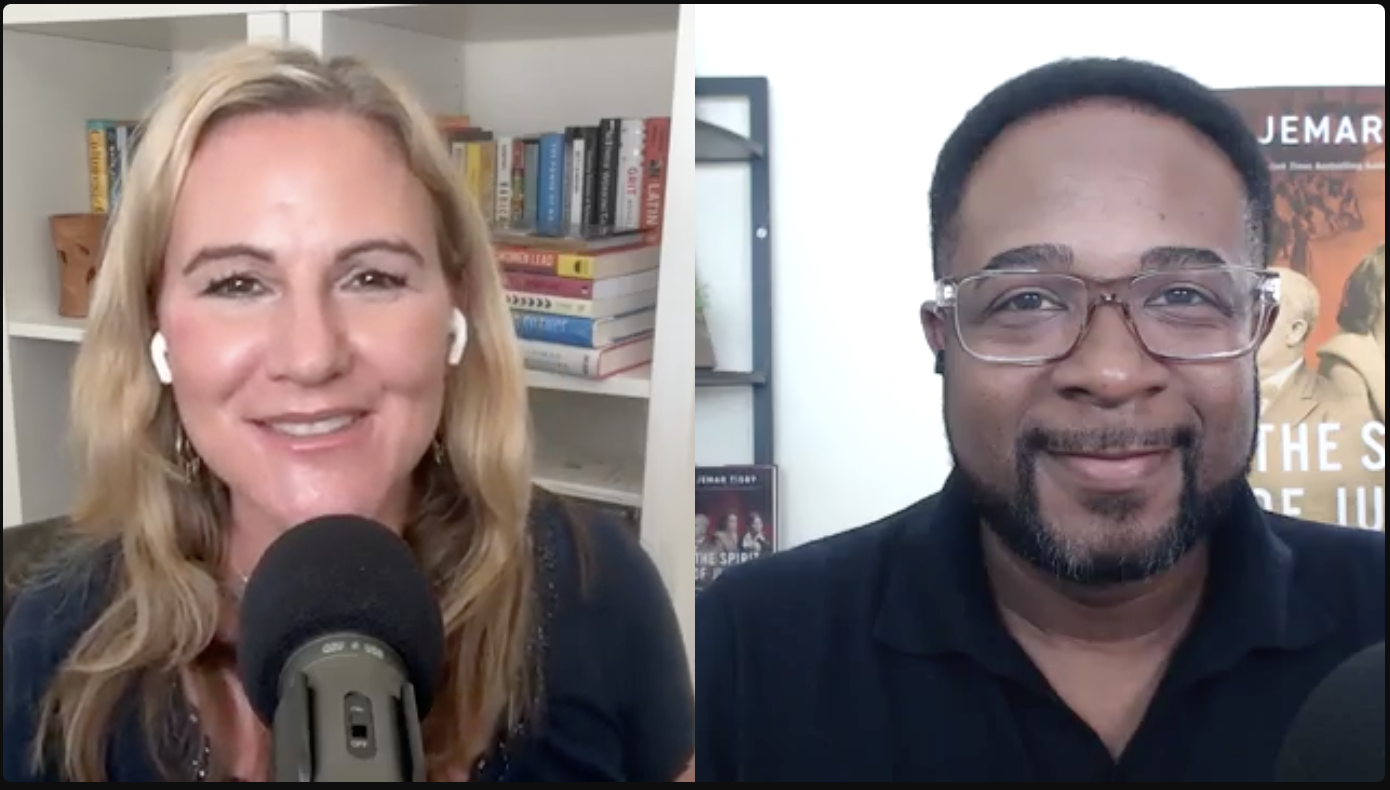
In the pursuit of becoming a great leader, Lance Ford found himself immersed in the fervor of the mid-90s Seeker church movement. However, his journey took an unexpected turn as he began to notice discrepancies between the teachings of Jesus and the prevailing leadership ethos. This realization led to his departure from the church he had founded, and a subsequent role at a prominent megachurch only solidified his conviction that a deeper issue permeated the church's leadership structures. What he discovered will challenge everything you thought you knew about leadership in the church.
If you're feeling overwhelmed by the pressure to grow your church at any cost, then you are not alone! The relentless focus on numbers and programs may be leaving you feeling spiritually depleted, despite the outward appearance of success. If you're feeling like you have to put on a facade of perfection and always have all the answers, then you are not alone! The pursuit of a mega-church model may be causing you to neglect your own well-being and authenticity as a leader. If you're feeling like you're constantly comparing your church to others and never measuring up, then you are not alone! The endless cycle of competition and comparison in the pursuit of growth may be leading to burnout and a loss of true community within your congregation.
My special guest is Lance Ford.
Lance Ford, a well-established church leader and author, has made significant contributions to the faith community through his publications in recognized platforms like Christianity Today and Outreach magazine. With a distinguished career spanning over three decades, Lance has applied his expertise as a pastor and church planner to develop unique training systems utilized by network seminaries and leaders globally. Renowned for his insightful books, including "Unleader," "The Starfish and the Spirit," and "Missional Essentials," Lance has demonstrated a comprehensive understanding of the complexities within evangelical spaces. His latest work, "The Atlas Factor," critically examines the inherent pitfalls of traditional church leadership models, offering valuable insights and practical wisdom for church leaders and pastors aiming to establish healthier and more authentic leadership structures. Lance's extensive experience and authoritative perspective position him as a valuable resource for reshaping leadership dynamics within the faith community.
You're not wrong with those little red flags. When you go to the scripture again, you start seeing it. - Lance Ford
In this episode, you will be able to:
- Embrace authentic and servant-hearted leadership in your faith community.
- Explore the pitfalls of the mega-church model and its impact on leadership.
- Learn to shift the focus of leadership to Jesus for a more genuine approach.
- Understand the disillusionment with the leadership industrial complex and its effects.
- Implement healthier leadership structures for a more sustainable and impactful church.
Cultivating healthier leadership structures
Creating healthier leadership structures within the church is a salient issue across different denominations and sizes of churches. Institutions can draw on Jesus Christ's teachings for inspiration, fostering a balance of power that encourages servant-hearted leadership. By shifting leadership paradigms and prioritizing the fundamental teachings of Jesus Christ, churches can cultivate healthier communities that better serve their congregations and embody the true spirit of Christianity.
The resources mentioned in this episode are:
- Join the Difference Maker community by visiting www.patreon.com/aWorldofDifference to access exclusive interviews and engage in deeper conversations with difference makers like Lance Ford.
- Purchase a copy of Lance Ford's book, "The Atlas Factor," to gain insight into toxic leadership systems and find hope for healthier faith communities. The book is available for purchase on various online platforms and in bookstores.
- Connect with Lance Ford for coaching, consulting, and training on church leadership and systems by visiting www.theatlasfactor.com or emailing info@theatlasfactor.com.
- Consider engaging in self-care practices to support your mental and emotional well-being, especially if the conversation has brought up challenging experiences or emotions. Take time to breathe, engage your senses, and prioritize your own health and well-being.
- Explore the free trial option for the Difference Maker community to access exclusive interviews, polls, and engage in conversations that can help you make a difference in your own unique way.
The majority are good. Even some of the worst abusers that we could name today, you look back at their history, you talk to the witnesses that were around in the early days. They started out good. - Lance Ford
The key moments in this episode are:
00:00:02 - Introducing the Podcast and Guest
00:01:52 - Lance's Background and Book
00:04:10 - Aha Moment
00:11:08 - Root Causes of Leadership Issues
00:14:15 - Church as a Platform for Narcissism
00:16:38 - The Evolution of Leadership
00:23:17 - Abuse of Power in Churches
00:27:04 - Jesus' Approach to Power
00:29:32 - Impact of the System on Whistleblowers
00:30:21 - The Atlas Factor
00:33:33 - The Importance of the Atlas Vertebra
00:35:06 - Paul's Teachings on Leadership
00:36:57 - Challenging Traditional Leadership Models
00:39:55 - Overcoming Cognitive Dissonance
00:46:03 - A Call to Action and Finding Support
00:49:19 - Importance of Metaphor and Theology
00:50:05 - Lance's Approach and Authenticity
00:51:46 - Recognizing Red Flags
00:52:47 - Lance's Empathy and Straightforwardness
00:55:21 - Self-Care and Encouragement
Timestamped summary of this episode:
00:00:02 - Introducing the Podcast and Guest
Lori introduces the podcast and the guest, Lance Ford. She highlights his background as a pastor, church planter, and author, and emphasizes his new book, "The Atlas Factor."
00:01:52 - Lance's Background and Book
Lance shares his background as a pastor and network director, and his journey of questioning leadership in the church. He discusses his previous book, "Unleader," and how it led to the writing of "The Atlas Factor."
00:04:10 - Aha Moment
Lori asks Lance about his moment of realization regarding the leadership culture in the church. Lance shares his experience of being on staff at a large church and witnessing questionable behavior from influential leaders, leading to his realization of the epidemic.
00:11:08 - Root Causes of Leadership Issues
Lori and Lance discuss the potential causes of the toxic leadership culture in the church. They touch on the attraction of power and influence in faith-based organizations and the potential draw for individuals with narcissistic tendencies.
00:14:15 - Church as a Platform for Narcissism
The conversation delves into the allure of the church as a platform for individuals with narcissistic tendencies to fulfill their desire for power and control. They explore the dynamics that enable and perpetuate such behavior within church leadership.
00:16:38 - The Evolution of Leadership
Lance discusses his surprise at the newness of the concept of leadership, as evidenced by its absence in older dictionaries. He highlights the industrial revolution's impact on the development of modern leadership theories.
00:23:17 - Abuse of Power in Churches
Lori and Lance discuss the specific impact of the industrial revolution on church leadership and the resulting burnout culture. They emphasize the need to address systemic issues rather than just symptoms.
00:27:04 - Jesus' Approach to Power
Lance delves into Jesus' teachings on power and leadership, emphasizing the contrast between worldly power dynamics and the servant leadership model promoted by Jesus.
00:29:32 - Impact of the System on Whistleblowers
The conversation explores the detrimental effects of the current leadership system on whistleblowers and women, highlighting the toxic masculinity and patriarchal structures within the church.
00:30:21 - The Atlas Factor
Lance introduces the concept of the Atlas factor as a metaphor for the burden placed on church leaders to carry the weight of the world. He explores the idea of decentralized leadership and the need to shift the focus onto Jesus as the true head of the church.
00:33:33 - The Importance of the Atlas Vertebra
Lance Ford discusses the significance of the atlas vertebra, its role in connecting the brain to the body, and how misalignment can affect overall health.
00:35:06 - Paul's Teachings on Leadership
Paul's writings in Ephesians are discussed, emphasizing the importance of the body of Christ and the misuse of titles such as "head pastor" in modern leadership models.
00:36:57 - Challenging Traditional Leadership Models
Lance encourages readers to re-examine their understanding of leadership by reading the Bible with fresh eyes and questioning the prevailing church growth and leadership models.
00:39:55 - Overcoming Cognitive Dissonance
The conversation delves into the challenges of navigating cognitive dissonance within the church, addressing the disconnect between what should be happening and what actually occurs in many church settings.
00:46:03 - A Call to Action and Finding Support
Lance offers support to those who have experienced abuse within the church, providing hope and practical resources for individuals and communities seeking positive change. He also shares his contact information for further assistance.
00:49:19 - Importance of Metaphor and Theology
Lance Ford discusses the significance of the metaphor of the Atlas factor and theological implications. He emphasizes the need for people to know they are not alone in dealing with toxic faith environments.
00:50:05 - Lance's Approach and Authenticity
Lori praises Lance's research synthesis and caring nature. She highlights his ability to give language to issues and communicate in a caring and loving manner. Lance's authenticity in addressing hard truths is also commended.
00:51:46 - Recognizing Red Flags
Lori emphasizes the importance of recognizing red flags in toxic faith environments. She encourages listeners to pick up Lance's book, "The Atlas Factor," to gain insight into unhealthy church dynamics and toxic leadership.
00:52:47 - Lance's Empathy and Straightforwardness
Lori appreciates Lance's empathy towards marginalized individuals and his ability to synthesize information. She commends his straightforward yet caring approach in addressing toxic faith environments and interactions with people.
00:55:21 - Self-Care and Encouragement
Lori encourages listeners to engage in self-care and mindfulness after listening to the podcast. She affirms the value and worth of the audience, urging them to take care of themselves as they continue making a difference in the world.
Learn more about your ad choices. Visit megaphone.fm/adchoices
Follow the podcast at:
- https://www.youtube.com/@aworldofdifference
- https://www.aworldofdifferencepodcast.com
- https://www.linkedin.com/company/aworldofdifference/
- https://www.instagram.com/aworldof.difference/
Join our Difference Maker membership community for a ton of exclusive content for as little as $5/month. (The price of your a latte at your local coffee shop to enjoy a whole month of content.) Lori's Travel Tips are included as well as exclusive minisodes with our guests not available anywhere else. Join for deeper conversations and a little fun today at https://www.patreon.com/aworldofdifference
Keep making a difference wherever you are!

Lori Adams-Brown, Host & Executive Producer
A World of Difference Podcast
0:00 Welcome to the a World of Difference podcast. I'm Lori Adams Brown, and this is a podcast for those who are different and want to make a difference. This podcast is sponsored by Betterhelp. If you are a person who really wants to understand what your strengths are, maybe you're not going through anything huge in your life. Therapy is not just for those who are in crisis, although it's definitely for that. But therapy is also a place where you're just stepping into your own skin, figuring out who you are, what it is you're offering to the world around us, and how you're making the world a better place. Betterhelp is here to help you with that, and I have really benefited by deep work, understanding myself a little bit better.
0:45 And I know many people have benefited from this resource, and that's why I'm proud to say they are a sponsor of this podcast. So if you are a person who could benefit from talking with a professional about anything going on in your life, I encourage you to stop by at Betterhelp. And the link I'm offering you today will give you 10% off your first month. And so hopefully that'll make a difference in your purse and pocket and wallet and bank account. So go to www.betterhelp.com difference today to get 10% off your first month of therapy. That is www.betterhelp.com difference to get 10% off your first month today. Today on the podcast, we have a man who is truly trying to make a difference in faith communities in ways that are both difficult to navigate with a lot of obstacles, but he brings a lot of research, experience and wisdom to the conversation. So happy to bring onto the show today Lance Ford, an author of multiple books, but he's releasing a new book called the Atlas Factor, and today we're going to talk about this book as it's being released. But I just wanted to give you a little information about Lance and why he's qualified to write a book like this. With over three decades of experience as a pastor and a church planner, Lance has been a coach and consultant who has designed unique training systems that's currently being used by network seminaries and leaders throughout the world. But he's also written, you may have read some of his articles in Christianity Today and Outreach magazine relevant and others, as
2:16 well as he co founded the centralized conference. His books, if you've read them, ones he's written in the past, are unleader, the Starfish and the Spirit, which is the first of his books that I read back in the day, missional essentials, the missional quest next door as it is in heaven and others. But this book is really important because he's addressing some issues in the faith community and especially evangelical spaces. And around this metaphor of the Atlas factor, we're going to unpack that together a little bit. But it's about shifting leadership onto the shoulders of Jesus and off of what we often consider a senior pastor, head pastor, especially at some of these very large churches, but even small churches. So I got to meet Lance back in Chicago when we were both speaking at a conference, the Restore conference up in Chicago in October. And I walked into the speaker room and he's the first person I met in there. And we really connected because of some similar spaces and experiences and really happy to have him on the show today. If you've not read any of his books in the past, you are really in for some insightful conversation. Because he's a big researcher, he reads widely, digs deep, and some of the things he shared at the Restore conference are things I still really have kind of mold over in my own mind. I know a lot of us have as to the things he was telling us about there and really have enjoyed getting an advanced
3:47 copy of his book. My husband Jason and I have both been reading it, and it's so insightful. So happy to introduce you if you've not yet heard of him or allow you to hear this man you've been following for a while and reading his work. So welcome to the world of Difference podcast today. Lance Ford. Hi, Lance. I'm so excited that we're going to have this conversation today. Welcome to the podcast and thank you for writing this book. I know that you've written things in the past, but this is a particular book I'm very excited about. So thanks for showing up today. Well, I appreciate you having me, Laura.
4:28 I've been looking forward to having this conversation. Me too. It was so great to meet you in person in Chicago a few months back in the speaker room and just to know some common experiences that we've had and some ways we're both trying to make a difference in faith spaces that have really formed us and that we care about getting better and doing better. And so as you are launching this book into the world, I wanted to start with just tell us a little bit about your background and how that led to this book coming forth. And as we say in the author community, just giving birth, even though you're a man, it feels like a new experience for you. Yeah, it does feel like well, I was present.
5:17 Yeah, I was present for all three of our children's births. We used, and this goes way back because it's more commonplace now in the states than it was then. But 30 something years ago, when we had all our three kids, we used midwives. And it was like a new idea, even though it's been going around for thousands of years. So everybody's like, what? You're not going to hospital? So I did see that, but I've never been one to say, we're pregnant or we're having a baby, because I saw what happened. Like, no, we're not pregnant.
5:58 But it does feel that way with a book. So, yeah, I was a pastor for 20 something years. Kind of went that route that so many people do as far as was a youth pastor, then an associate pastor, college type pastor, and then end up being a senior guy, planted a church, and we planted several churches out of it. And this is back in the mid 90s when we planted a church in the northwest suburbs of St. Louis. And that was during a time, Lori, when it was the height of, I don't know if you're too young to remember this, and of course, you were living abroad, so I don't know how much it was affecting you, but it was the Seeker movement, the Seeker church movement. And so that in the mid 90s was the big rage, and I got caught up in that. And that was about the time when what I called the leadership industrial complex was really starting to hit its stride. And so everything in the church was starting to become for pastors.
7:18 They didn't call themselves pastors anymore. They called themselves leaders. And it was all about leadership stuff. And so I drank that knew my. There was this new little company where you could actually order books on this new thing called the Internet, and this little company called Amazon that sold books. That's all they sold, was mean. I got to know my Amazon driver by name real well because he was showing up two or three times a week, bringing me leadership books. And so, like so many of my pastor, we were. We were reading everything on leadership. We're loading van loads up of our staff and team to drive to Willow Creek, Chicago, a couple times a, and so after several years of that along the way, it just became really evident to me that there were a lot of things that I was reading and that I was seeing, and that was seeing behind the scenes from pastors that I was getting to know and rub shoulders with. It was like, there's a lot of this stuff that's not adding up it doesn't sync well with what Jesus said, and it doesn't sync well with what I'm seeing in the epistles. And it is kind of excused under the mantra of leadership.
8:51 And then I was feeling the weight of it, too, of being this great leader and trying to live up to all that. So over several years, it finally got to the point where I just couldn't take it anymore and really stepped out of my position at the church that we had planted and ended up stepping into a leadership position of running a couple of networks. And one of the networks was a church planting network that took me back to the Dallas Fort Worth area where I had grown up and on staff at a very large megachurch that also had a large church planting consortium that I ended up being the director of. And that really thrust me into the who's who of well known pastors. And then I really got to see how the sausage was made. So that's what really kind of started me on my journey of saying, we have to really have a go at these systems that we have in the church. I wrote my first book in 2012 on it. It was a book called Unleader. I don't feign or say I was a voice crying in the wilderness. I was one of a few voices, but there wasn't a lot of people saying anything or questioning it, especially with published books at that point. When
10:23 my first book was published in 2012, but then in 2014 was when Mark Driscoll went down, then by 2018, hyples. And then it's just been like dominoes ever since then. Right? And as we're recording this and we're in the midst of one, that's all in the scenes right now with Mike Bickle and ihoP, and you have to wonder who's on deck. Somebody right now is scurrying and will be exposed in weeks or months. It's going to happen. It keeps happening. So, anyway, that's kind of the nickel tour of what's brought me to this point of this next book. Yeah, it can be pretty disorienting for a lot of people who have seen from within, but maybe not exactly behind the curtain in ways that you have.
11:25 When leaders like this, which, as you mentioned, are in this particular evangelical community here in the United States where we're recording, it does seem like a constant situation. But for those who are involved in, for example, maybe a megachurch right now, or they consider themselves a white evangelical in the United States, or they're in maybe Brazil, and they go to the big christian conference where one of these authors is coming to speak or in know where they don't see necessarily behind the curtain in ways that you have, it can be disorienting to hear these kinds of things. And so when it first happened for you, my question is, what was your moment of. Aha. Like, I'm not crazy. This is what it really is. Yeah. I think it was a combination of being on staff at this church. Let me first off say it's not just megachurches and you know that it can be a church of 50 people, and you've got this little dictator that's got his little f.
12:29 It can be anywhere. It's just that in the mega situations, there's more resource and more power to wield. Right. And there's more influence. And the bad thing about that is when these leaders that have these huge platforms, they are having a huge influence and multiplying who they are in all these other young leaders, young pastors, young church planters. So I think for me, it was when I then really was on staff at this large church, and then my role caused me to do a lot of travel. It caused me to be literally shoulder to shoulder. I mean, you could start dropping names here. And I would probably say yes, was with that guy, spent a lot of time with that individual and just seeing grossness and just excuse and attitudes that were just so out of bounds and so anti Jesus that it spun your head. So that was probably when it all came together for me, and it just kind of punctuated that.
13:48 This is an epidemic. Yeah, you probably get this question a lot because I do. A lot from people who are trying to understand this, which is trying to understand the unimaginable and something that can't fully be understood in some ways. It's one of those, like chicken or the egg questions that you probably get a lot. Like, was this leadership culture? What formed some of these, what we would often think of as people on the. Whatever spectrum of narcissism, as these leaders who can't be questioned, who it feels more like a cult. So is it that the leadership culture created this? Were they like this already? Is that who's surfacing to the top and then they're giving them skills?
14:30 What is your perspective on all that? Yes, probably a little bit of all of it. I think that if someone has a. If they're, like, on the spectrum for a narcissist, if. If they move towards these type of positions, then it's like gas on the fire on the inside of them. And I haven't done any heavy studies. Maybe you have. I haven't done any heavy studies on. I've seen a few statistics, but I can't pull any of them up, or I can't recall any in particular right now. But I do know that from what I have seen in the little research on that particular, that I've seen that the church or faith based organizations, they do draw narcissists into leadership. There is something about a person that even may have a little bit of narcissistic tendencies in them that they are drawn to opportunity to have power. And the church is a great place for that. Right. I mean, it's a great place.
15:49 If you have that and you want to be seen as an expert or you want to be known as a person who is in charge and be in charge, you've got a pretty good shot at getting a chance at living that out in the church somewhere to one degree or another. Yeah. If you like to hear yourself talk and you want a captive audience that can't interrupt you and can't question you, and you can talk for 30 minutes on a stage with a door. Great place to live out your rock star dreams. Exactly. So, yes, I know we've seen one or two of those along the way, but as you were doing research for this book, and I don't like spoiling people's books, so don't feel like you have to do that, because I do want people to buy your book. And by the way, go buy his book. Is there anything, as you were researching it, that sort of surprised you or you didn't expect or that kind of stood out to you in any way as you were researching? Yeah, and I don't know if we've mentioned the title of the book, but I sure want to mention it's the Atlas factor, and the subtitle is shifting leadership onto the shoulders of Jesus.
16:57 So, I tell you one thing, Lori that really surprised me was one day during the research for it several years ago, I was just thinking about the word leadership, and I thought, well, so I have this Oxford dictionary that's a giant. It weighs about 30 pounds, literally, and it's a 1955 version of the Oxford Universal Dictionary. And one of the things that scholars or researchers like about that particular dictionary is it goes into the evolution of a word. So it can tell you, well, here's what this word meant in 1910.
17:41 Here's what it meant in 1845. Here's what it meant in 1320. So it's very comprehensive. So it's just assumed that everybody knows what leadership is. So I thought, well, should we be assuming this? I want to go look in the Oxford dictionary. So I pulled it out, and I started looking for leadership. Now, I'm not saying the word leader or lead. I was looking for the word leadership, and I couldn't find it. And I was like, am I missing some pages? Did some pages fall out of my old 1955 Oxford dictionary here, or what's going on? And sure enough, it was not defined. I finally found the word one time as part of around an eight or nine word definition for the word lead or leader. I can't remember which one, but I was amazed. I was like, the word leadership is not even defined in this go to dictionary. Well, then come to find out in the 1915 Noah Webster dictionary, it wasn't in there at all. So I was shocked that, well, wait, this word, which we hear, it's $87 billion industry, by the way, that's more than media. That's more than the media industry today is people spend on books and media of leadership
19:11 training, $87 billion a year. But what, 50, you know, 70 years ago, it wasn't even in the go to dictionary. So the thing that surprised me was how new leadership is now. A lot of people immediately jump and wait. Leadership's been around. The Chinese were studying leadership. Plato talked about leadership, sure, but not in the form that we talk about it today, not as management. And really, that is the thing is, most leadership today is management. And it's management theory. And management theory really was created in the early 19 hundreds for the leadership or for the industrial complex.
19:59 And so you had the technology, you had cars being created, assembly lines, all this other mechanistic things. When the industry exploded and they needed to run these factories, they needed to operate them. So a guy named Frederick Winslow Taylor from Bethlehem Steele is really the one that scholars would say he was the father of modern day leadership. He wrote a book called the Scientific Practices of leadership, and this basically divided the workers from management. That's when you got the separation of white collar and blue collar, and he systematized it. And then that started being imported straight into the corporate America. I'm doing all this research on the term leadership. And so I started looking to see the history of books on the term leadership. And there were barely just a handful of books, even in the 1930s, with the word leadership in the title, it started gaining some traction in the. You started seeing a lot of books on leadership. So then I thought, well, let me find Christian. What's the history of christian books on leadership?
21:19 And then I was really blown away, Lori, because prior to the 1960s, you can't find any books with the term leadership in the title, and probably at best around ten to twelve in the 1960s that even had the term leadership in a Christian titled book. And so that really took me down a wormhole of saying, okay, this is really a new thing in the church. And I was thinking one day, I thought 40, 50 years ago, if you were in a coffee shop and there were some local pastors sitting around a table sharing together from a few different churches, I can't prove this with empirical data, but I just know because I'm an old guy and I was around back then, you wouldn't even have heard the word leadership mentioned around that table. No one would have said they wouldn't have called theirselves leaders. None of the local community would looked at them and called them leaders.
22:19 They would have called them pastors, ministers, probably ministers, which is the word servant. So leadership as we know it today, in particular, as is management, it's a new thing. It really is a new thing. It is a new thing. And I think some of the conversations that are being had around this because there's a lot of deconstruction, disentangling that whole conversation that's happening both in just your average church member or people sitting in the pew or I guess stadium seating, whatever it may be, as well as the academic theologian scholar side.
23:01 Right. So it's happening in a lot of spaces. But I think as this conversation is happening, I do often hear, and you may hear this, too, people will say, well, abuses of power have been since Constantine, like this has been going on for a while, which we study in church history. And I agree, abuse of power has always been something that the church has had to wrestle with. But there is something very specific about the industrial revolution. There is something very specific about treating church volunteers or staff as cogs in a wheel of a factory to produce, like you used the word fiefdom earlier, that, mixed with religion, has a whole other type of abuse of power and burnout culture. It's not that southern baptist churches forever and ever haven't had women volunteering to make casseroles. Yes, that's been going on. But there is something extra happening now when a church Christmas service is like literally having people burn out immensely in ways that they can't be available to their families or even find Christmas triggering in the aftermath of being on staff at a church. And so, yeah, explain a little bit about that particular part of the burnout culture that you've seen. Well, it ends up putting such a heavy burden upon, like you said, volunteers, staff members, and they don't have a say in it. So nowhere do you find any construct in the New Testament that
24:33 gives permission or even intimates that one person makes the decisions for everybody else. You just don't see it. And Jesus was working to nip this in the bud with his own disciples because they had grown up in two iterations of heavy power. They'd grown up under roman power. I mean, they were subjugated to it every day under roman oppression. And so they could see the symbols, they could see the soldiers in the streets all the time, right? So, I mean, they're under this power base then, the place that they should have some refuge or some sanctity under the israeli religion at the time, they're under this heavy handed priesthood that wields power and is full of corruption and is a constant threat to anybody that stepped out of the bounds. Then you also had the scribes and the Pharisees that are always trying to keep everybody in order as they saw it. So these guys, their whole concept of any type of government is power and okay, and threat and strong arming. And so when you see James and John's mom go to Jesus and say, hey, once you set your kingdom up, can my boys know some really good positions? Secretary of the Navy or
26:06 be the speaker of the house or whatever? And the other disciples get mad, but they were jockeying for position, know, they were arguing about who was the best among them. And so Jesus finally, and Jesus is literally talking to them about his crucifixion, and they're worried, know who's going to get the best? Get the corner office. And Jesus at one point sets them down and says, hey, the Gentiles exercise dominion over one another. They exercise lordship over one another. And the word gentiles there, I mean, that's a metaphor. If it had been in one of the Old Testament prophets saying this, it would have said the Babylonians or said, the Egyptians do this. So gentiles a metaphor for the world system. And so Jesus saying, hey, I know you've seen it that way.
26:58 That's what's filled your head and filled your imagination. And now you think, I'm going to start something like that. And then he emphatically says, it will not be this way among you. He forbids them. And then this is where he says, you don't get it. My kingdom is completely different, is antithical to that. The first will be last, which was what he was saying, in fact, in Matthew 20, right before he says, that is where we get the parable of the vine dresser and the one that owns this vineyard that calls these workers and pays one at the end of the day, the same that he paid the one in the morning, basically saying, equality here, he's saying, the first will be last and the last will be first. In other words, I'm flattening this thing. And he says, the greatest will be the servant. And then he punctuates it by saying, the son of man comes as one who serves. You guys have got it all wrong.
28:02 This is not about power. This is about letting go of power. And so Jesus had to deal with this with the disciples from the very beginning. And the question we need to be asking ourselves is, why is it so very, so much among us today? And it's not enough for us just to deal with the symptoms. We have to point out the symptoms. We have to talk about the symptoms, but at some point, we have to be talking about the system, because the system is what's creating all these symptoms of abuse that we have and just doing the same thing over and over again or doing it better. The famous Einstein quote. Right? What's that? That's the definition of insanity. But Edwards Dimming said 50 years ago, every system is perfectly designed to create the results it gets. And so it shouldn't surprise us that we see this continual leadership abuse, because we have a system that protects the abusers and empowers the abusers, and it's all in the name of leadership, and it's all in the name of management. And in those systems that gives these leaders immunity or gives them the right, they feel like they have the right to exercise this form of power, and they don't. Absolutely, yes. And it crushes these whistleblowers. It crushes
29:35 women in particular, because the system is. There are so many good men in the world, but unfortunately, some of the men that made this system had a level of toxic masculinity involved in it. Systems made by men for men. But even men are being crushed in it, men who are speaking up. But because of the way social hierarchy is in this system, especially christian patriarchy, is embedded in all of it. And so, as we look at the system, you have this book that you've written, right, about the atlas factors. Tell us, without ruining too much of the book, why atlas? What is the Atlas factor? And how can it help us overcome these obstacles? Yeah, well, it's a metaphor. And I had, in fact, a book that came out about three years ago, called the starfish in the spirit, which is really about decentralized leadership. I had put a metaphor in there about atlas, as we know immediately. You think about the picture of this hulking lone figure that's trying to hold up the world, right? Which was, he had been cursed by Zeus to hold up the weight of the world over his shoulders. And so I'd use that metaphor in this other book about what it's like to try to be a pastor, to be this solo, heroic pastor and everything. And I experienced this.
31:03 Everybody expects you to be, to give 45 to 50 fantastic talks a year. Who do you think you are? I mean, come on. Nobody's that good. So you're supposed to be the top theologian, the top speaker, the face of the church, the fundraiser, the marriage expert, the family expert, right? All this stuff. Who do you think you are, and who does everybody else think can live up to that? No one can live up to that. No one was ever called or formulated. You see no picture of that whatsoever in the New Testament. You can't come up with it. The thing is, even these pastors, so many pastors, they're being victimized by the system, too, because they're expected to be atlas. So I kind of had that in my mind for a long time. And one day, I had made a post on social media somewhere about leadership in the church being problematic. And I said something along the lines of, it's problematic because it disjoints the body of Christ from her true head. Jesus and I had a buddy that shared that post. I made his chiropractor, commented on it, and it came back to me.
32:30 It popped up in my feed where he had commented on it. He said, oh, yeah, that's like supplexation with the c one and the c two vertebra, the atlas vertebra and the axis vertebra. Well, it triggered me. I was like, whoa. Because he said atlas. And so I started looking this up and this term subluxation. In fact, this particular chiropractor, a guy named Eddie Weller out of St. Louis, had written a little book called it just makes sense. And I ordered that book, and I was fascinated. I ended up reading four more books on chiropractic, Lori So there you go. That's how this wormholes will open up. So the deal is, there's a very limited group of chiropractors that practice what they call upper cervical care. So they only focus on the top two vertebra, the c one and the c two. Once again, the atlas and the axis.
33:37 And the atlas vertebra is the first vertebra, and it doesn't look like the others. It's more that concave where it holds the brain stem. It's what gives your head the swivel and all that. But its importance is that if anything below it, if there's a disconnection or a disjointedness, a disalignment, then it shuts off the information that the brain is trying to send down into the body. And so he made this statement in his book. In fact, he said, we that practice upper cervical care, we don't snap, crackle, and pop all the other vertebra. When you come to see us, we just focus on these two because we believe if we get that connection right, get that alignment right, everything else will come into place. And then he named many maladies that he had seen in his own practice. I mean, everything from high blood pressure, believe it or not, some, in fact, my buddy that he was, his chiropractor has a rare form of cancer, and his t counts and everything have totally changed through the chiropractic work. It's just amazing what happens. And so he made this statement. He said, the brain is in the body. It just needs no interruption. Well, you start taking what Paul had to say about the head and the body. Just read
35:07 Ephesians. Read Ephesians four in particular, where Paul talks about the gifts that the Lord has poured out into the apostle, prophet, shepherd, and teacher. Which is not a leadership text, by the way. It's a body text. So he's not talking about professional ministry. He's talking about the body of Christ. You may be a second grade elementary teacher. You may be a plumber. You may be a doctor. You may be a lawyer. You've been gifted. The Lord has these gifts poured out into his body. But the problem is, when men try to act like Atlas, when they try to take the place of Jesus, some of them even call themselves the head pastor. You're taking Jesus'place. There's nowhere in the scripture where any man's called head pastor. Jesus is the head pastor. There's no place in the scripture where anyone's called senior pastor. There's one place where Peter says, the chief shepherd. And guess who it is? Jesus. That position's already taken. Guys, don't even fill out the application. We don't have the opening right now, okay? We never will. So we just come up with all this stuff that is so distant from the scripture, and it's antithical to the things that Jesus and the apostles had to say. But we formulated it, and we've amalgamated it through cognitive dissonance with our ideas about leadership, and we believe it to be true, and we just accept it ad nausea without
36:38 investigating it and being good bereans and really taking a good look at it. And once again, it's the system. I'm sorry, I ranted right there. Oh, I love a good rant. This was the funnest part of podcasting, is hearing a good rant once in a while. Yeah, no, I'm with you here as a family who's done a lot of chiropractic. All five of us and my family have benefited from chiropractors. In fact, I think as a baby, the first place I was ever taken to was a chiropractor, even from my family of origin. And we do understand the brain and how it does impact the entire nervous system. Having walked through a lot of therapy over the last couple of years from my own toxic work environment in Omega church, understanding the way our nervous systems react to different things. And it's chiropractic, it's amazing how it can help so many things. But I think that in addition to that, just having, being a woman who worked as a woman pastor as well, and having gone to seminary, the word study I did many years ago on kefale, the word that's translated head into English in a lot of the versions, we understand that word head in English in the United States in 2024 to mean certain things that it may not have necessarily meant, even in the original, ancient context. It could mean source, like head of a river. And when it's seen in that way, God is a source for us. It is where
38:11 things are. We want that source to have a beautiful flow without any inhibition, in the way that a chiropractor would want everything signaling from the brain all the way down to the toes to have a very straight path without any inhibitions. And so, like you said, understanding that word in ways we might use it in business in the United States, and English is not what it was ever intended for to be in the church. So we're putting our current language and culture mix in with post industrial evolution understanding of that word in ways that it wasn't intended. That's why not only is language important here, but cultural exegesis is important. But I think that the average church goer, I'm thinking of white evangelical attendant that may listen to this podcast, or somebody, maybe in a megachurch in Singapore, who's been heavily influenced by maybe the teachings of Joel Olstein or different authors who have sold lots and lots of copies of their books in this evangelical industrial complex. Listening to this may cause a lot of cognitive dissonance, where one thing is being said here and portrayed here, and it's beautiful. And look at the beautiful Christmas pageants that happen and all these, that what we often hear, and you've probably heard this, too, is look at the fruit. And so as you answer some of those questions that people might have, why is there such a disconnect between what should be happening and what looks like
39:42 it's happening and what's actually happening? And how can people see those red flags when they're not meant to be seen? Yeah, well, that's a big, good question. But first of all, I think you described it really good there, Lori is that for the most part, it's all that anyone has ever experienced or known or seen. So when you grow up in this or even, let's say, you become a Christian at 25 or 30, you're immediately put into this, and that's all you ever see. And I know as a young leader, as a young pastor, even when I would have these little red flags popping up in me, and I bet you experience this, too. You and Jason probably experienced this, too, you shove them down and push them down, because everybody does it this way and everybody's saying it, and all the ones that are writing the books and doing all the talking. So it must be me. I'm probably the one that's wrong on here. Okay? So my first thing would say is, no, you're not wrong with those little red flags. And when you go to the scripture again, you start seeing it. And one of the hardest things for us to do is to pick the Bible up and read it like we've never read it before. And that's one of the things I challenge people to do. I say, look, even get a translation that you're not used to. Pick it and read through the New Testament three or four times and see what you see. But look at it
41:14 without overlaying, which is called isegesis, right. Rather than exegesis, rather than really going to the source, put all your tradition and your experience aside and try to read it like you're seeing it for the first time. Then compare that with what you see every day or every week in the church that you're a part of and see if they look alike. And unfortunately, a lot of times, they don't look much alike. So going back to the source is vital. And important. But I think that one of the big reasons that we have this also another factor that comes into play is that we've had about 50 years of church growth industry in the church and the church growth movement really?
42:05 Well, it's really about 60 years. But then it started gaining traction publicly in around 1969, around 1970 with the church growth movement. And then that evolved, as I mentioned earlier, the Seeker church movement. And then the leadership complex started coming into play into it. So the thing is that really the prevailing. I'm doing a generalization here, but it's a strong majority. Is that the prevailing model of church and leader you see today? They grew up in this. Now, they were trained in all this. They went to seminary with no other model than this. All the leadership stuff and the conferences that they went to, it all comes out of this.
42:53 And so there's really not been hardly anybody that's practiced. I'll tell you about the only notable christian group that has practiced something other than this. And I'm saying notable. So I'm not saying that they're the only ones, but the most notable would be the Quakers or the Friends churches. They operate in a flattened leadership. They operate as siblings, as brothers and sisters with equality. The term servant leadership came from a guy named Robert Greenleaf. He was a Quaker. Okay? So that was a big part of his background that helped him look at what leadership should be and formulate it from more what we would see in a New Testament way because of what he experienced among, in his form of Christianity. But when you are indoctrinated over and over and over by a false doctrine, then you look like the crazy one. If you're the one that's speaking against it, and that's that old adage, the day will come when those who are mad will think you're mad because you're not mad like them. The old british term mad, meaning crazy. And that's kind of what happens today. Now, I would say that there's been more of a breakthrough the last few years with the fall of all these notable leaders. I can talk more openly about it. I get more invitations to
44:25 talk and teach and train and consult and coach on it, because finally we're getting to a place where a few people are going, maybe something is wrong with the way we're doing leadership. It's like, well, do you think, you think there might be. So there are starting to be more cracks to have the conversation now, thankfully, and with some wonderful books like Chuck DeGrot's work on narcissism in the church or you think about Scott and Laura Behringer and Tove and these things, the conversation is more open today than it was even ten years ago. It is. Absolutely, it is. We have a lot more understanding now and more people. I thank you. Social media, as terrible as it is, especially x, which has been a space for the hashtag church, two movement and spaces where especially women were not being listened to, where their voice can be heard by some, at least. But there's so much work to be done. So as we kind of sort of land this a little bit for people, is there anything else that you're hoping people will get out of your book or anything we haven't addressed that you think is really important for people to understand in this whole conversation before we kind to wrap it up. And also, at the end of your answer, I'd love for you to give people how they can find you, and we'll link your
45:56 book and everything, the Atlas factor. But what's the last thing you want to leave people with? Is either a call to action or something you want them to understand, and then how can they find you? Yeah, well, the first thing I would say is just know that you're not crazy, that you're not off on what you're feeling. And if you are a church member that has suffered under some form of abuse, whether it be sexual abuse by one in power, whether it be power abuse, bullying, it seems like that there's narcissism in the leadership system or the leaders that you're among, if you're a staff member, if you're a volunteer. When I wrote the Atlas Factor, I was thinking about you, and I was writing this for you. First of all, to let you know that you're not crazy. Second of all, to give you some language to apply to it that maybe you've not been able to formulate in words what you're feeling, what you're seeing, and then give you some theology to back it up and to walk it out.
47:04 And then the book gets really. I have very practical applications in there as far as systems that can be adapted for churches that really do want to change. And I would say this. I think the majority of pastors out there are good people that want to do it right, but I think that their imaginations have been held captive by these systems, and they just don't know how to think outside those boxes. So I think that the majority are good. Even some of the worst abusers that we could name today, you look back at their history, you talk to the witnesses that were around in the early days. They started out good. They started out good hearted. I mean, if you listen to some of the quotes or go back to the Mars Hill podcast, you'll hear Mark Driscoll saying things 20 years ago that then in his last years, he was saying the very opposite.
48:07 And that's one of the things about this addiction to power can really change you. And I mean David, that happened to David. So David was a man after God's own heart and he abused his power. So that means any of us could do it. That's why no man is made to be king. It was never God's intention. So anyway, the book offers hope. We have a website, theatlasfactor.com. I can be reached directly email info@theatlasfactor.com theatlasfactor.com we do coaching consulting We do all that kind of stuff But hopefully the book can be some help to get you started Thank you so much for researching for pouring your heart and time and soul into this book It's not an easy book to put out there because it requires you to dig deep into some things that aren't easy to say And nobody wants to be the person who shines a light on toxic systems But you've not only done that you've helped to see the terrible and the beautiful and that there can beauty beauty from the ashes But it takes work and it takes opening our eyes So thank you for opening our eyes Thank you for digging into not only the research but theology, theology helping us with the metaphor of the Atlas factor and just framing it in way way where people can know they're not crazy they're not alone and we can link arms and do this together And thank you for not only writing the book but offering
49:39 to be available to coach and walk alongside churches that want to get better Thank you for this I'm sure it's going to a a difference I've enjoyed getting advanced advanced copy of it My husband has also been in your pre release group reading it and telling me about it too as he's read it It's really good So I do hope listeners will a a copy of it and that you'll get some people that reach out to you from this Thanks for this conversation today Lance and just for being who you are I appreciate the work you are doing Lori It's hard brave work I appreciate it and thanks for having me You're welcome I'm going to have you stick around for our difference maker community and ask you another question But for today just thanks for being on the show and hope the release of your book goes really well Lots of people read it Thanks One of the things I appreciate about Lance is not only is he man man who's researching and synthesizing his own experience of anecdotal information of in in the spaces he's writing about and meeting lots of people in in the conversations he's having where he's trying to move the needle forward a healthier healthier type of faith community in these evangelical spaces here in the US or just the church here in the west and really globally his work is global But since he's based in the He's you know seeing a lot of patterns here a a lot of us are seeing But one of the things I really appreciate about Lance is he's able to synthesize a lot of that research
51:10 and information and put it into words that help us understand it to give language to it And he also is a person who deeply cares and listens to those who are on the margins who have been oppressed by some of these systems that he's been part part of and that he's giving language to it in way way that can help really set people free When our souls are held captive by toxic environments or leaders creating empires and fiefdoms as he mentioned that is not space space where our souls are safe It's not psychologically safe It's not spiritually safe And if you're listening to this and you're in space space like that today I hope that it has given you some information you needed to hear some hard truths Our brains are not wired to handle cognitive dissonance very well So if you're seeing these beautiful in in your faith environment and you're also seeing these really terrible things it can a a lot of havoc on your brain your body your system It's not place place that's healthy And so hopefully he's helped you see some of those red flags Really I absolutely urge you to pick up his book the Atlas Factor It'll help give insight into maybe why things haven't seemed right And also I really appreciate the fact that he not only synthesizes this information but he's just real real straight shooter Not in harsh harsh way but in way way that's really caring and in in my experience with him both in this interview
52:41 and in the speaker room and just interacting with him at the conference in Chicago which a real real delight to get to know him So happy to introduce this difference maker to you If you've not known him before and hopefully you'll go to his website order his book read it and let us know because I would love to hear how you're interacting with it And once again he hangs out with us in the difference maker community and we go a little bit deeper about his experience behind the scenes a a person who has been consultant consultant in some of these church environments who can speak into what it looks like behind the scenes and what the reality of that is and why a hard hard call isn't easy but is necessary for us to move forward in healthy healthy way So if you're in that space or you know someone who's in that space who could really benefit from the conversation we have with him and the difference maker community please let them know about it Once again you can join our difference maker community for as little as 5 a month which is less than the amount of money I spent on my local coffee shop getting my coffee this morning because unfortunately I broke our coffee maker But yes So join us in the difference maker community You can go to ww patreon.com a a world of difference and in in on this conversation with Lance That's exclusive for our difference maker community and all the previous conversations that are available to you there that are just categorized in different sections now because there's so many of them So when you join in you get
54:12 access to all these different exclusive interviews and you can also vote in polls where we want to hear from you Your voice matters and your perspective matters Obviously that's the point of this podcast and we love it when difference makers speak into what you want to hear Are there guests that you want us to bring on Are there topics you want us to cover So we a a poll going on until I think February 25 where you can join difference maker and speak into that Let us know You can also do a free trial for a week to see if you like it and then join if you want to But I'd love to have you there in in this conversation with Lance because it's a very special one And all other other ones I love them all It's hard to choose like what's your favorite child I don't know I love all our exclusive in in the difference maker community and I love it when new people join It makes me happy to have new perspectives in in and you can dm me on the platform you can comment you can give us your two cent worth to help us a a difference together bring your differences around the table So pull up chair chair with us in the difference maker community would love to have you join us there where we go a little bit deeper And I know that this conversation can bring up a lot of things for people And so if it has for you just a a deep breath maybe several deep breaths Look around and engage your senses in way way that helps you be mindful and care for your brain and your body Because you matter and you are loved And I know many of you are spreading love all around the world by caring so deeply for people
55:43 and working hard for people And I just want you to know that you matter today and you are worth taking care of And when you take care of yourself a a person who's a difference maker you're taking care of others too So please do that for yourself You deserve to be healthy and you deserve space to just be And I just want you to know that you cared cared for today as you listen to this podcast because it can bring up some things for people So do take care of yourself because you matter and you're loved And as all of you around the world are doing so many incredible inspiring spectacular amazing outstanding things or you're just loving the people right where you are in your own home which is also and and spectacular and amazing Thank you for the work that each of you do and for just being yourself spreading your differences around the world in ways that make our world a better place just by being you Keep a a difference wherever you
